Emergency services
Read more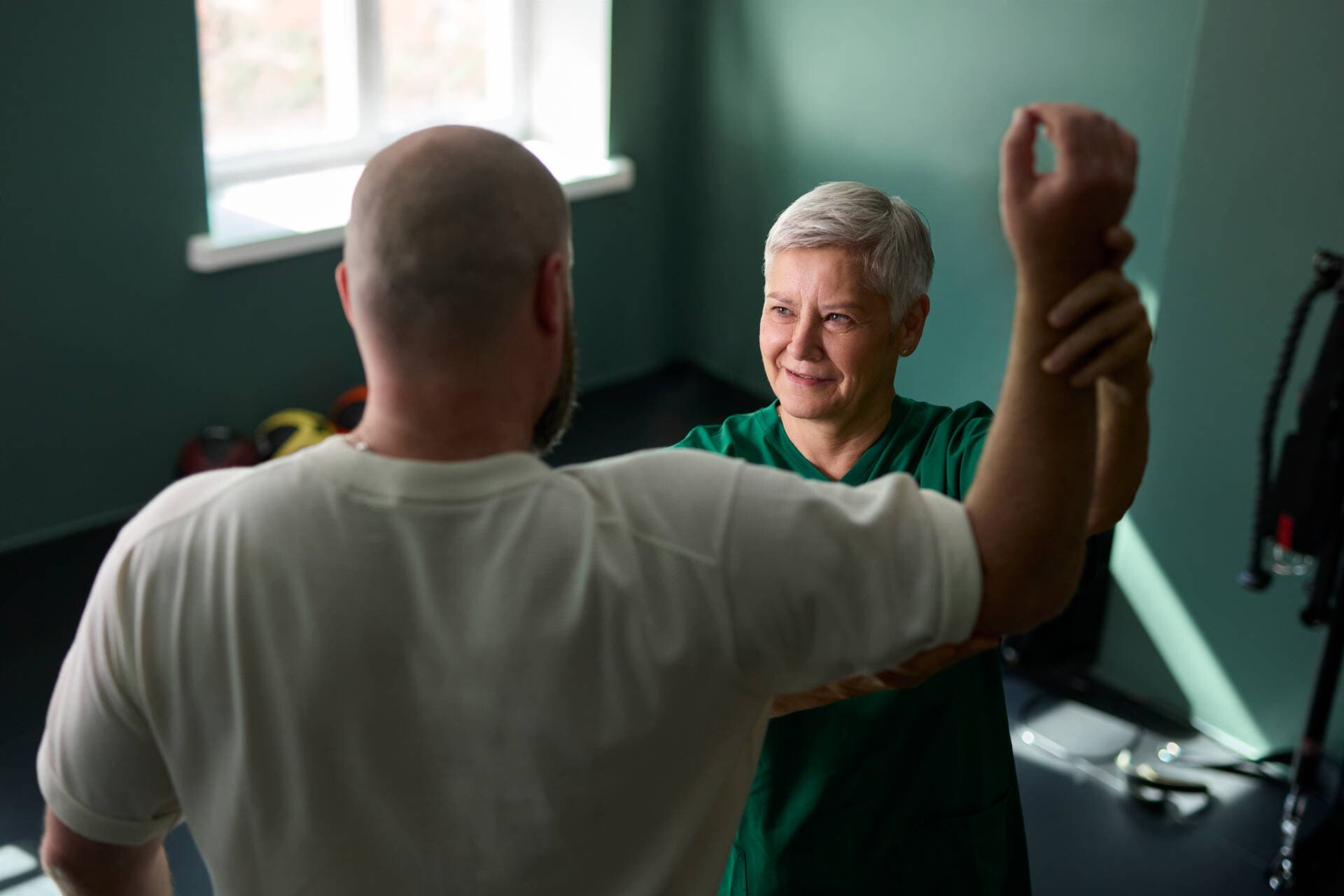
The First appointment for back pain is a 30-minute appointment with a physiotherapist, where an assessment of your situation is performed by an expert specialised in back ailments, and you receive instructions for further care. You do not need a referral.
*The price of the visit is 49 € after the Kela reimbursement and includes the Kanta and outpatient fees. The price without the Kela reimbursement is 64 €. A Kela reimbursement for physiotherapy can be obtained without a doctor's referral 4 times a year.
Possible follow-up care and further examinations are not included in the price.
A physiotherapist can help assess new, mild, prolonged or recurring back pain. At the first appointment for back pain, an assessment of your situation will be performed and you will receive a plan for suitable follow-up treatment. No referral is needed.
Book an appointment with a back physician if the pain is associated with muscle weakness, numbness or other nerve symptoms. An assessment performed by a physician may also be needed if your functional capacity has significantly deteriorated.
If the back pain started after a fall, a sports injury, or another accident, seek an assessment performed by a physician. The physician will assess whether imaging examinations or other treatment is needed. Find the nearest emergency services.
Seek emergency services if the accident is associated with severe pain, significant muscle weakness, or other serious symptoms.

Revised 10/6/2026
Published 11/23/2023
Back pain is one of the most common musculoskeletal ailments, and most adults experience back pain at some point in their lives. The pain is most commonly felt in the lower back, but it can occur anywhere in the back area.
Back pain and its onset are affected by lifestyle as well as physical, psychological and health-related factors. Most episodes of pain subside within a few days or weeks, but if symptoms persist, it is advisable to investigate their cause.
Most back pain is so-called non-specific back pain. This means that examinations do not reveal a single clear cause for the pain. The pain may start suddenly or develop gradually, and it is often caused by several different factors.
Typical underlying factors for non-specific back pain include:
Sometimes, back pain is caused by a clear structural cause or disease, the identification of which is important for planning the correct treatment.
Clear, more precisely definable causes of back pain include, for example:
Symptoms of back pain vary from a mild ache to severe, sharp pain. The pain can start suddenly or develop gradually, and it can feel very different in different people.
Choosing the right specialist for back pain can feel difficult. Here are clear instructions to help you move forward. If you are not sure where to start, you can book a Back Pain First appointment. A physiotherapist will perform an assessment of your situation and refer you to suitable further treatment if necessary.
Although back pain is less common in children and young people than in adults, symptoms should always be examined carefully. In most cases, the underlying cause is strain or muscle-related, but it is important to rule out more serious causes to prevent the condition from becoming prolonged or interfering with growth.
Back pain in children and young people is often related to sports. You can find specialists at Sports Mehiläinen who are familiar with back problems in active children and young people. Book an appointment with an exercise medicine physician or sports physician who treats children and young people and specializes in back problems.
See a physician if back pain is accompanied by muscle weakness, numbness, or other nerve symptoms. An assessment by a physician is also necessary if the pain significantly impairs your functional capacity or the symptoms do not start to ease. Book an appointment with a back specialist.
Seek immediate emergency care if you have any of the following symptoms:
At the appointment, our specialist will find out what might be causing your symptoms and, if necessary, plan further treatment with you.
Imaging is usually not needed to investigate acute, non-specific back pain. However, imaging or laboratory examinations performed with a physician's referral can rule out serious causes of pain.
X-ray photography is performed at the physician’s discretion, most often due to an accident. X-ray photography may also be needed to evaluate the posture of the spine or in cases of suspected osteoporotic fracture.
A standard X-ray should be taken while standing to assess, for example, vertebral displacement and scoliosis. Wear of the facet joints, i.e. osteoarthritis of the small joints of the spine, is also often visible in X-rays.
Magnetic resonance imaging (MRI) is considered if pain radiating into the leg is prolonged or if symptoms include muscle weakness. Magnetic resonance imaging is also essential in surgical planning.
If you have a pacemaker or for another reason cannot undergo magnetic resonance imaging, modern CT or computed tomography imaging equipment can be used to examine possible nerve compressions.
If a bacterial infection or an inflammatory back disease is suspected, laboratory examinations may be necessary.
At Mehiläinen, back pain treatment is always individualised, fast and comprehensive. This is guaranteed by our broad multidisciplinary team, which includes physiotherapists, orthopaedists, neurosurgeons, physiatrists as well as analgesia specialists, such as pain physicians and psychologists.
Your treatment is based on accurate diagnostics, the latest technology and solid expertise. Together, we will draw up an individual treatment plan for you and work in close co-operation with occupational health care to support your return to work.
The most important instruction in the self-care of back pain is to avoid complete bed rest, meaning staying active within the limits allowed by the pain. Continue with your regular daily activities, take breaks from prolonged sitting and increase physical activity gradually. Even light walking can alleviate symptoms and support recovery.
Pain can also be relieved with hot or cold packs. If necessary, you can use over-the-counter painkillers available from pharmacies in accordance with the package instructions and the physician's recommendations.
The cornerstone of back pain treatment is active rehabilitation. A physiotherapist familiar with treating back symptoms will help you find exercises suited to your situation and create an individual treatment plan with you. The exercises are designed to suit your ailment, daily life, and resources, as well as to support the functional capacity of your back and prevent the recurrence of back pain.
Surgical treatment of the back is considered if other treatments have not provided sufficient relief or if the symptoms involve significant nerve compression. Surgical treatment may be considered, for example, in the following situations:
You can book an appointment directly for an assessment of the need for back surgery or contact our surgical advice. Our surgical advice service will help you find out your possibilities of having back surgery at a Mehiläinen hospital.
Leave your contact information, and we will contact you as soon as possible. Contacting us does not commit you to anything.
An active everyday life is the best medicine for back pain. Remember these four cornerstones for the well-being of your back:
Fysioterapeutti
Edistää ja ylläpitää toiminta- ja liikkumiskykyä sekä ehkäisee tuki- ja liikuntaelinvammoja.
Orthopaedist
An orthopaedist treats musculoskeletal disorders and injuries through rehabilitation and surgery.
Fysiatri
Lääkäri, joka on erikoistunut tuki- ja liikuntaelinsairauksiin ja kiputiloihin sekä niiden ei-leikkaukselliseen hoitoon ja kuntoutukseen.
Back surgery
When back symptoms affect daily life or function, a spine surgeon will assess your situation and discuss treatment options with you.
Usually, back-related pain does not radiate strongly to the abdominal area. Sudden and severe abdominal pain, which may be accompanied by back pain, often indicates something other than a musculoskeletal ailment. It always requires an urgent assessment performed at a physician’s emergency reception.
It is extremely rare for back pain to be the first symptom of cancer. In certain situations, however, it is possible. You should consult a physician if the back pain is associated with unexplained weight loss, a decline in general condition, fever, or if the pain is persistent and worsens at night at rest. A previous history of cancer is also a reason to examine prolonged back pain carefully.
Yes, it can. Renal pain is usually felt in the flank or back area. The pain may be associated with urinary symptoms, fever, or a decline in general condition. For example, a urinary tract stone can cause cramp-like, fluctuating, and very severe back pain. Seek emergency care if severe flank or back pain is accompanied by fever, deterioration of general condition, or difficulty urinating.
Kidney-related pain is typically felt deeper and higher up, often unilaterally in the flank or on the side of the back. It can come in waves and may be accompanied by fever, nausea, or urinary symptoms. Muscular back pain, on the other hand, is often felt over a broader area in the lower back and worsens or eases with certain movements or positions. If you suspect kidney-related pain, see a physician promptly – especially if you have a fever or difficulty urinating.
Change positions often, use a chair that supports your back and adjust your workstation. Take breaks from sitting every 30–60 minutes and do short stretches. Light physical activity during the day also supports the well-being of your back.
If you do a lot of sedentary work, add exercise and training that support the functional capacity of your back to your everyday life. If needed, a physiotherapist can help find methods suitable for your situation.
The most important thing is to find a position in which the spine is in as neutral and painless a position as possible. Try placing a pillow to support your body. When sleeping on your side, a pillow between your knees can help, and when sleeping on your back, a pillow placed under your knees can reduce the arching of the lower back. Avoid sleeping on your stomach, or at least place a pillow under your pelvis to reduce excessive arching of the back.
Staying active and continuing light exercise are primary methods. For many, individually designed exercises guided by a physiotherapist are an effective way to rehabilitate the back and support the recovery of functional capacity.
Yes, but in moderation. In muscle-related back pain, a light massage can relax tense muscles and relieve pain. Stretching the back can also relieve symptoms.
If the pain is very severe, radiates into the leg, or there is an underlying injury, it is advisable to consult a professional before a massage.
Most often, it is possible to return to work quickly, even if there is still pain. With the support of occupational health care, work can be modified to be lighter, which often even promotes recovery. If prolonged, occupational health care will assess the schedule for returning to work and support measures in more detail.